

Hampstead village is one of the most affluent areas in London and despite its quintessential English appeal, its international residents give the area a wonderful cosmopolitan flavour.
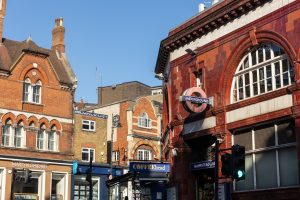
Thanks to its chalybeate spring waters, Hampstead gained notoriety as a London spa in the 17th century. Expansion followed with the railway (Hampstead Village is connected to the Northern line) and smart Georgian housing tempted affluent city folk to settle here. Today, it’s a hotly favoured postcode of celebrities. Visit in summer and you’ll find a very different atmosphere to the winter months. As the temperature rises, the streets burst into life. Diners spill out onto pavements, pub gardens surge and the bathing ponds become a daily pilgrimage for many.
Here is the SoH guide to all the things that make Hampstead Village an incredible place to call home…
Old world charm
York flag stone pavements, Victorian style street furniture and a smattering of red telephone boxes lend an old world charm to this northern pocket of the city. This is London through the lens of a Paddington Bear film.
Make your way down the winding cobbled alleyways that shoot off the main thoroughfare of Hampstead High Street and you’ll find yourself surrounded by curiosity shops and firelit taverns. One such pub, The Holly Bush, was originally built as stables for painter George Romney and sits off the beaten track on Holly Mount, cloistered by other Grade II-listed Georgian houses with their elegant, gauged arches and recessed sash windows.
Across the high street, weekend antique hunters flock to Keith Fawkes on Flask Walk. Along this alley you can pass by all manner of independent florists, tea rooms and gelato parlours as you meander down towards the Heath.
Wild swimming
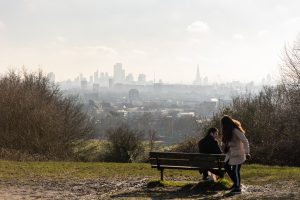
The pull of the Heath is strong all year round and village residents have vast swathes of green space quite literally on their doorstep. Covering 800 acres, this mix of meadow and woodland is rather magical – it is, after all, the place that inspired C.S. Lewis to write The Chronicles of Narnia. Amid the afternoon ramblers and fair-weather picnickers, wild swimmers circuit laps in the natural bathing ponds come rain or shine. With the mixed bathing pond conveniently located close to the edge of the village side of the Heath, locals have easy access to one of Londons finest open air natural swimming pools.

The midas touch
In a sea of Georgian housing stock, 1-3 Willow Road is the ultimate palette cleanser with its unapologetic concrete frame faced in red brick, flat roof and large ribbon window. This terraced trio of modernist houses was the brainchild of celebrated Brutalist architect Erno Goldfinger (of Trellick Tower fame) and ruffled feathers with fellow residents during the planning process – including James Bond author Ian Fleming. While numbers one and three remain private residences, 2 Willow Road is managed by the National Trust and offers a wonderful glimpse into Goldfinger’s life, as well as a prime piece of architecture to marvel at up close.
Hustle and bustle
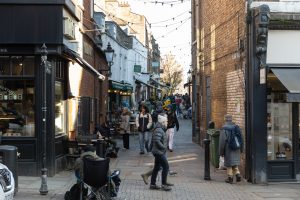
Though safely tucked away from London’s tourist-trapped city centre, Hampstead marches to the beat of its own tempo. Serviced by a heady mix of smart boutiques and pavement bistros, the High Street welcomes a steady swell of weekend patrons – particularly in the summer – and orderly queues around the block for La Creperie de Hampstead are not uncommon. Trail off from here and the pace slows considerably, with quiet roads to get lost along and pretty houses to size up. Residential road Church Row leads up to the parish church of St John-at-Hampstead, with a central avenue of trees flanked by houses built during the 1720s – many of them on the National Heritage List. And towards the Heath Street end sits Gardnor Mansions – the first modern block of flats in the village, built in 1898.
For respite from the throng, 17th century Fenton House is a welcome sanctuary, with a host of art treasures and beautifully landscaped gardens. Close by you’ll also find Burgh House – a Grade I-listed Queen Anne house that performs as an art and events space, as well as a museum dedicated to the rich history of Hampstead.
Blue plaque country
It’s almost impossible to walk through Hampstead Village without spotting at least a handful of commemorative blue plaques (there’s over 75, apparently) nodding to its impressive roster of famous past residents. Connecting the Heath to the high street, Downshire Hill alone nods to photographer Lee Miller, political artist John Heartfield and Muppets creator Jim Henson. And running just parallel to these, on Well Road and Well Walk, you’ll find Daphne du Maurier’s and John Constable’s one-time residences.
Thinking of moving to Hampstead Village? Take a look at our homes here
Featured in